Strategy · 21 Nov 2026 · 9 min read
Essential quarterly IT review checklist for businesses
Discover a comprehensive quarterly IT review checklist to ensure your systems are optimally managed and aligned with business goals.
By SystemMap
Why a quarterly IT review is crucial for your business
In today's fast-paced digital landscape, businesses rely heavily on their IT systems to operate efficiently and effectively. A quarterly IT review is not just a best practice; it is essential for maintaining the health and performance of your technological infrastructure. This process allows businesses to assess their systems, identify potential weaknesses, and ensure that all components are aligned with organisational goals. The challenge many businesses face is the lack of a structured approach to these reviews, resulting in overlooked issues or inefficient resource allocation.
This is where a comprehensive checklist comes into play, serving as a guide to ensure all critical areas are assessed, and nothing is missed. By utilising a checklist, companies can streamline their review process, making it easier to document findings and implement necessary changes. Furthermore, regular reviews foster a culture of continuous improvement, where IT systems are not just maintained but optimised to support evolving business needs.
Key components of an effective quarterly IT review checklist
An effective quarterly IT review checklist should encompass various aspects of your IT systems, ensuring a holistic approach to system management. Here are the key components to consider:
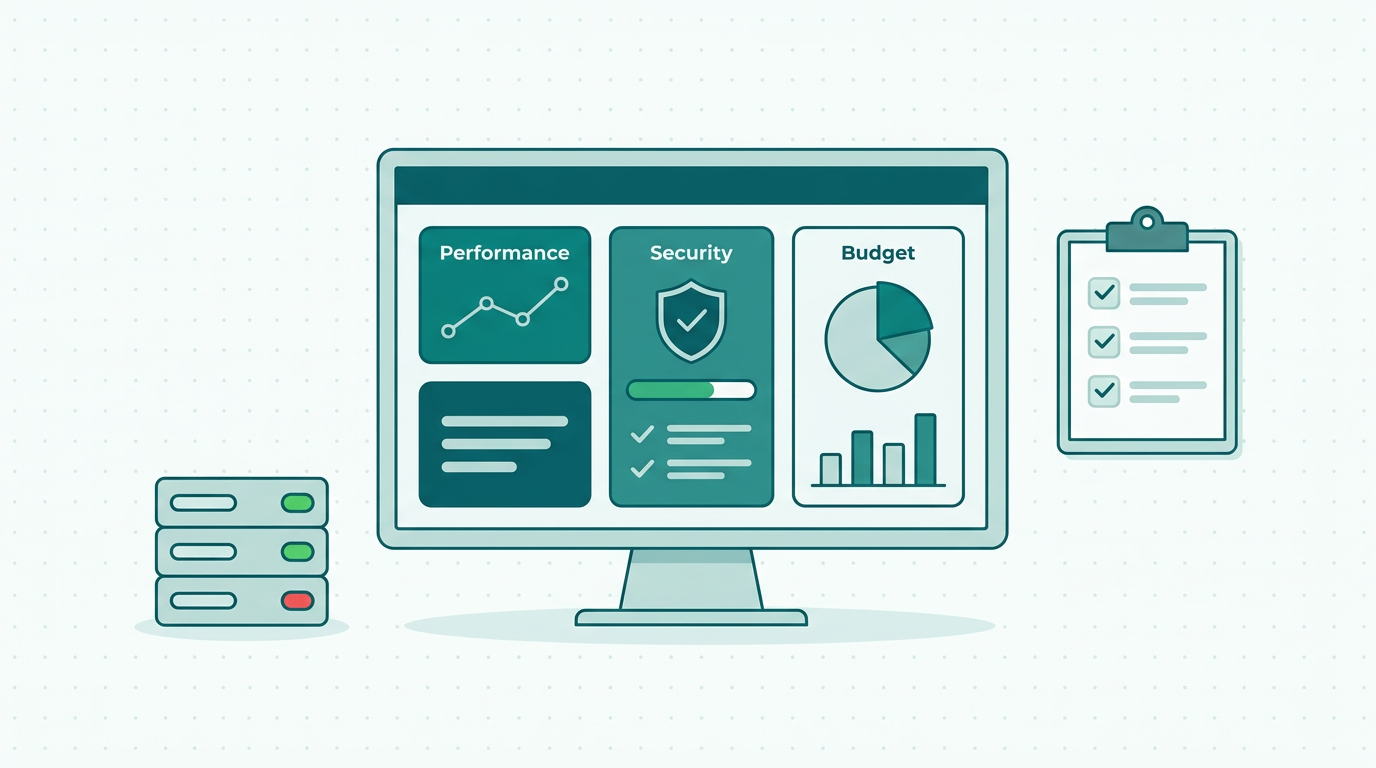
- System performance evaluation: Assessing the performance of your IT systems is vital to identify any bottlenecks or issues that may hinder productivity. This involves checking server uptime, application responsiveness, and network speed. By analysing performance metrics, organisations can detect anomalies that may require immediate attention.
- Security audits: Regularly reviewing your security measures is essential to protect sensitive data from potential breaches. This includes evaluating firewall configurations, antivirus software, and user access controls. Conducting penetration testing and vulnerability assessments can provide insights into areas that require fortification.
- Compliance checks: Ensuring your IT systems comply with industry regulations is crucial to avoid potential penalties. Regular checks should be conducted to verify adherence to relevant standards, such as GDPR or HIPAA. This is particularly important as regulations evolve, necessitating ongoing education and adaptation.
- Backup and recovery assessments: It is vital to review your data backup and recovery processes to ensure they are functioning correctly. This includes testing backup restores and verifying backup frequency. Implementing incremental backups and ensuring off-site storage can further enhance data security.
- Cost analysis: Understanding your IT expenditures is essential for budget management. Review your monthly costs, including software subscriptions, maintenance fees, and hardware purchases, to identify areas for potential savings. Regularly analysing these costs can reveal opportunities for renegotiation or consolidation of services.
- System performance evaluation
- Security audits
- Compliance checks
- Backup and recovery assessments
- Cost analysis
How to implement your quarterly IT review checklist
To effectively implement your quarterly IT review checklist, it is important to establish a structured process that involves your IT team and other stakeholders. Start by scheduling dedicated time for the review, ensuring that all necessary personnel are available to contribute. Creating a calendar event for the review can help institutionalise this process. Next, assign specific responsibilities to team members for each checklist item, promoting accountability and thoroughness in the evaluation process. As findings are documented, it is crucial to establish a follow-up mechanism to ensure that any identified issues are addressed promptly.
This can include setting deadlines for resolving any problems and scheduling follow-up meetings to review progress. Furthermore, it may be beneficial to incorporate a visualisation tool, such as SystemMap, to help document and track the relationships between your IT systems and their owners. With SystemMap, you can create a visual overview of your systems, including data flows, costs, and contracts, ensuring that your quarterly reviews are comprehensive and informative. Additionally, utilising collaborative platforms can foster communication among team members, enabling real-time updates and feedback.
The role of documentation in your IT review process
Documentation plays a pivotal role in the quarterly IT review process. It provides a record of findings, decisions made, and actions taken, which can be invaluable for future reviews and audits. Maintaining detailed records ensures that your IT team can track changes over time, understand historical issues, and establish patterns that may indicate underlying problems. Moreover, documentation fosters transparency and accountability within the organisation, as team members can refer back to previous assessments and understand how improvements have been made.
This transparency is crucial for fostering trust within the team and among stakeholders. By using a tool like SystemMap, you can enhance your documentation efforts by capturing not only technical details but also business implications. This means that stakeholders can easily access and understand the state of your IT systems, driving informed decision-making. Additionally, documenting the rationale behind decisions and changes can provide context for future evaluations, ensuring that the lessons learned are not forgotten.
Common pitfalls to avoid during your IT review
While conducting a quarterly IT review, there are several common pitfalls that you should be aware of to ensure an effective process. One major pitfall is neglecting to involve key stakeholders in the review process. It's important to gather insights from different departments to ensure that all perspectives are considered, as IT impacts every area of the business. This cross-departmental collaboration promotes a more comprehensive understanding of how IT systems support business functions. Another common mistake is failing to follow up on previously identified issues. If problems are documented but not addressed, they can resurface and lead to larger issues down the line.
Establishing a tracking system to monitor the status of these issues can help ensure accountability. Additionally, rushing through the review can result in critical areas being overlooked. Allocate sufficient time for each checklist item to ensure thorough evaluations. Lastly, not updating the checklist regularly can lead to outdated practices and missed opportunities for improvement. Regularly reviewing and refining your checklist will ensure it remains relevant and effective. Consider scheduling a mid-quarter review to adjust your approach if necessary.
Measuring the success of your quarterly IT review
Measuring the success of your quarterly IT review is essential for understanding its impact on your organisation. One effective way to gauge success is by tracking the resolution of identified issues. If you see a decrease in the number of recurring problems over time, it indicates that your review process is improving system health. Additionally, you can measure the effectiveness of your IT review by evaluating user satisfaction. Gathering feedback from employees on system performance and responsiveness can provide insights into the impact of your IT strategies.
Surveys, interviews, or informal feedback sessions can be effective in gathering this information. Furthermore, analysing cost savings resulting from the implementation of improvements can help justify the value of the quarterly review process. By establishing clear metrics, such as response times, uptime percentages, and user satisfaction scores, you can ensure that your IT reviews are not only systematic but also result in tangible benefits for your organisation. Lastly, consider benchmarking your performance against industry standards to evaluate how well your IT systems are performing compared to competitors.
So, how can you start your quarterly IT review?
Starting your quarterly IT review is a straightforward process, but it requires commitment and organisation. Begin by developing your checklist based on the key components outlined in this article. Involve your IT team and other stakeholders early in the planning stages to ensure buy-in and collaboration. Schedule your review at the start of each quarter to establish a routine and create a culture of proactive management within your organisation. Consider using milestones to track progress toward completion.
Make use of tools like SystemMap to enhance your review process, ensuring that all systems, owners, costs, and contracts are visualised in one place. This can significantly simplify the documentation process and help identify dependencies that may not be immediately apparent. Encourage your team to share insights and experiences during the review, fostering a collaborative environment. By taking these steps, you can lay the foundation for a successful quarterly IT review that contributes to the long-term success of your business. Remember, the goal is not only to review but also to improve continuously.
Additional best practices for an effective IT review
To further enhance your quarterly IT review process, consider adopting these additional best practices:
- Set clear objectives: Define what you hope to achieve with each review. This could include improving system efficiency, reducing costs, or enhancing security.
- Incorporate technology: Leverage tools and software that can automate aspects of the review process. This can save time and reduce the likelihood of human error.
- Train your team: Regularly invest in training for your IT staff to keep them updated on the latest technologies and best practices. This helps ensure that your reviews are informed by current knowledge.
- Engage in proactive problem-solving: Instead of merely identifying issues, encourage your team to discuss potential solutions and innovations during the review.
- Document lessons learned: After each review, take a moment to reflect on what went well and what could be improved for next time. This iterative approach fosters a culture of continuous improvement.
Frequently asked questions
01What is a quarterly IT review?
A quarterly IT review is a structured assessment of an organisation's IT systems conducted every three months. It aims to evaluate performance, security, compliance, backups, and costs, ensuring that all systems align with business goals. This review serves as a proactive measure to identify weaknesses and implement improvements in a timely manner.
02Why is documentation important in an IT review?
Documentation is crucial as it provides a record of findings, decisions, and actions taken. This helps track changes over time, fosters transparency, and assists in future reviews and audits. Good documentation practices also facilitate knowledge transfer among team members, ensuring continuity in case of personnel changes.
03How can I ensure my IT review is effective?
To ensure an effective IT review, involve key stakeholders, allocate sufficient time for thorough evaluations, and regularly update your checklist to reflect current practices and technologies. Additionally, consider using collaborative tools to enhance communication and documentation during the review process.
04What tools can assist with the IT review process?
Tools like SystemMap can enhance your IT review process by providing visual representations of systems, data flows, costs, and contracts, making it easier to understand relationships and dependencies. Other tools may include project management software for tracking tasks and performance monitoring tools to assess system health.
Ready to see your own systems clearly?
Map your IT landscape in minutes. Free to start.
Start free